
Dubuque Previous Residents by Era
No single roll lists everyone who occupied one Dubuque address. Recorder indexes establish transfers, city directories place listed householders, and census schedules identify whole households. Sanborn maps date a building's footprint and use, while permits mark later physical work. Choose the source that overlaps the target year, then confirm the name in a second record.
| Source | Years It Covers | Where Held | What It Shows |
|---|---|---|---|
| Recorder deed and mortgage series | 1824-1907 for listed historic series | Recorder and SHSI microfilm | Grantor, grantee, legal description, and deed language |
| Modern Cott and Iowa Land Records | Online cutoff not officially verified | Online portals and Recorder office | Indexed transfers and images where available |
| Dubuque city directories | 1856-1991 digitized | City archive and Carnegie-Stout | Listed occupants, spouse, work, address, and telephone |
| Federal and Iowa censuses | 1840-1950 federal public range; special Iowa years | CDH, NARA, and library databases | Household members, ages, origins, work, and address geography |
| Sanborn maps and permits | Map and report-specific | CDH, Library of Congress, and City archive | Building footprint, use, applicant, owner, parcel, and work |
For a recent chain, start with the current parcel and Recorder. For the late nineteenth or twentieth century, add the digitized directory and the closest census. Early lot history may require State Historical Society microfilm, plats, and territorial deed books. An exact Dubuque online deed cutoff was not verified, so move to the office or catalog rather than inventing a date.
Start Dubuque Resident History
The current parcel supplies the bridge between a modern street address and old land records. Search Dubuque County and City property records in Beacon, or use the county GIS route if the portal is blocked. Copy the parcel identification number, called a PIN, the full situs address, legal description, current owner label, and deed reference. Situs means the physical parcel location. A mailing address is where tax notices go and is not automatic proof of residence.
The City Assessor handles property inside Dubuque city limits; the County Assessor handles parcels outside. Postal "Dubuque" can cross that line. Confirm jurisdiction with the GIS city-limits layer. Preserve entity names, co-owners, estates, and trusts exactly as shown because each changes the next name search.
Walk Dubuque Resident Deeds Backward
The current owner is the first grantee to test. A grantee receives an interest; a grantor gives or transfers it. Search the Dubuque County Recorder's Cott route or statewide Iowa Land Records, then match the party, legal description, and recorded deed reference. Street addresses are not always indexed. Lot, block, subdivision, or other legal wording is the safer link.
- Copy the current owner's name, PIN, legal description, and deed reference from the parcel record.
- Find that owner's purchase deed and confirm the seller, instrument type, and same land description.
- Search the seller as an earlier grantee to locate that person's purchase.
- Repeat the link. Record each date, party role, document type, and reference without assuming every deed was a sale.
- When the web index ends, ask the Recorder for the deed or use SHSI microfilm and cataloged deed books.
- Grantor and grantee
- The grantor transfers an interest; the grantee receives it.
- Chain of title
- The linked sequence of recorded transfers for the same land.
- Legal description
- The formal lot, block, subdivision, or survey wording that can survive a changed street name or number.
The index is a finding tool, not the whole instrument. Warranty, quitclaim, executor, trustee, sheriff, tax, and foreclosure deeds carry different meanings. For a complete or certified chain, work with the Recorder or a qualified abstractor.
Search Dubuque Resident Deed Fields
The Iowa Land Records search is the inspectable statewide alternative to the county index. It accepts county, recording date, party role, last and first names or a full company name, and document type. Results can be sorted and may distinguish one record per land document from each matching party. Open a detail for parties, record date, type, legal description, references, and any image indicator.
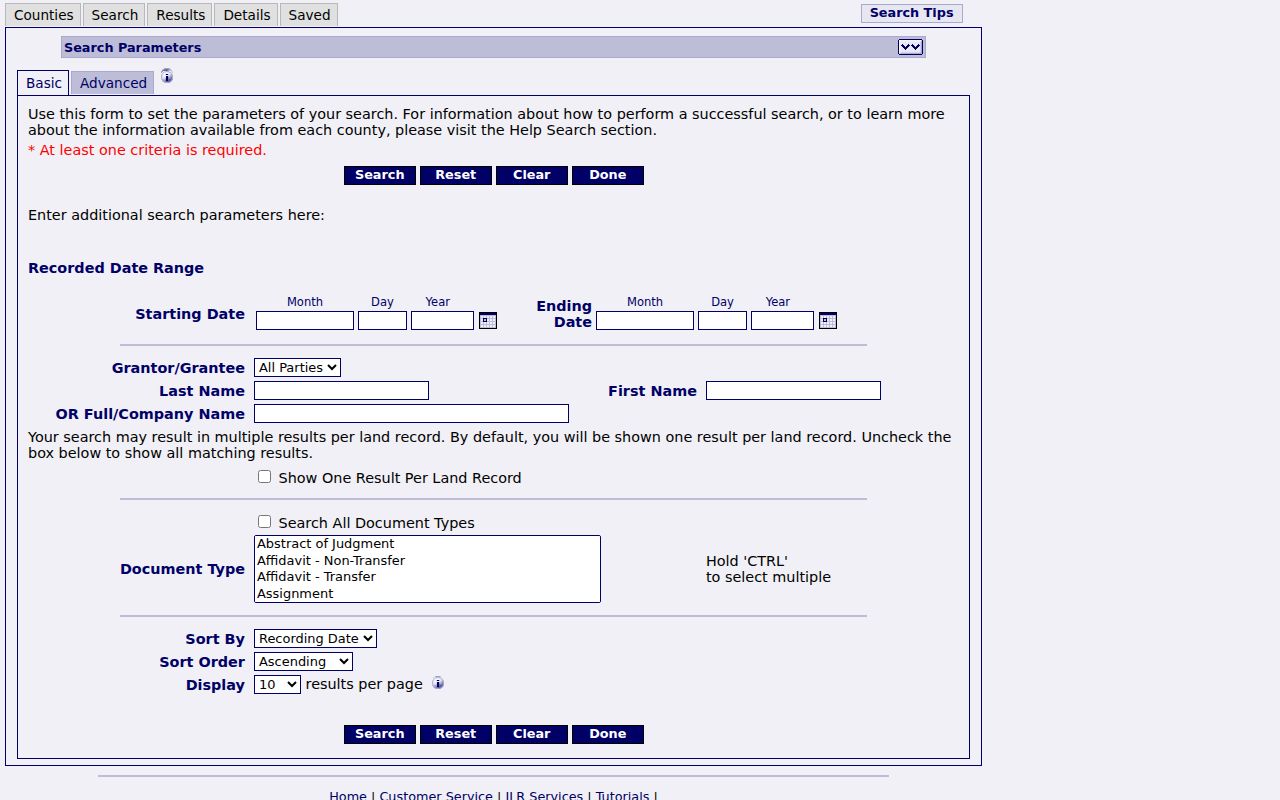
The form image shows why the party role matters when looking for previous residents. Search a seller as grantee to move back one transfer. Do not invent a book, page, document number, or available image when the live result does not provide it. The Recorder's counter and copy service remain the fallback.
Dubuque Resident Records Before Statehood
The State Historical Society catalog places land and town-lot indexes as early as 1834, a combined deed and mortgage index in 1834-1857, territorial deeds in 1824-1846, land deed records in 1860-1907, town-lot records in 1855-1901, and sheriff deeds in 1888-1930. Probate indexes and records begin in 1835. Those dates give previous-resident research a real fallback when modern search screens stop.
The current 1891 courthouse replaced an 1839 structure, and county access is still concentrated there. No official source reviewed confirmed a records-destroying courthouse fire. An absent web hit is more likely a coverage, catalog, spelling, or access issue. Cite the series, volume, page or instrument, and custodian.
Dubuque Resident House Collections
The City's historic property research links point to city directories, architectural surveys, HABS records, Carnegie-Stout, the Center for Dubuque History, and local historical collections. No single official one-click house-history database was found. The useful method joins a parcel and deed chain to plats, census, maps, photos, newspapers, and permits.
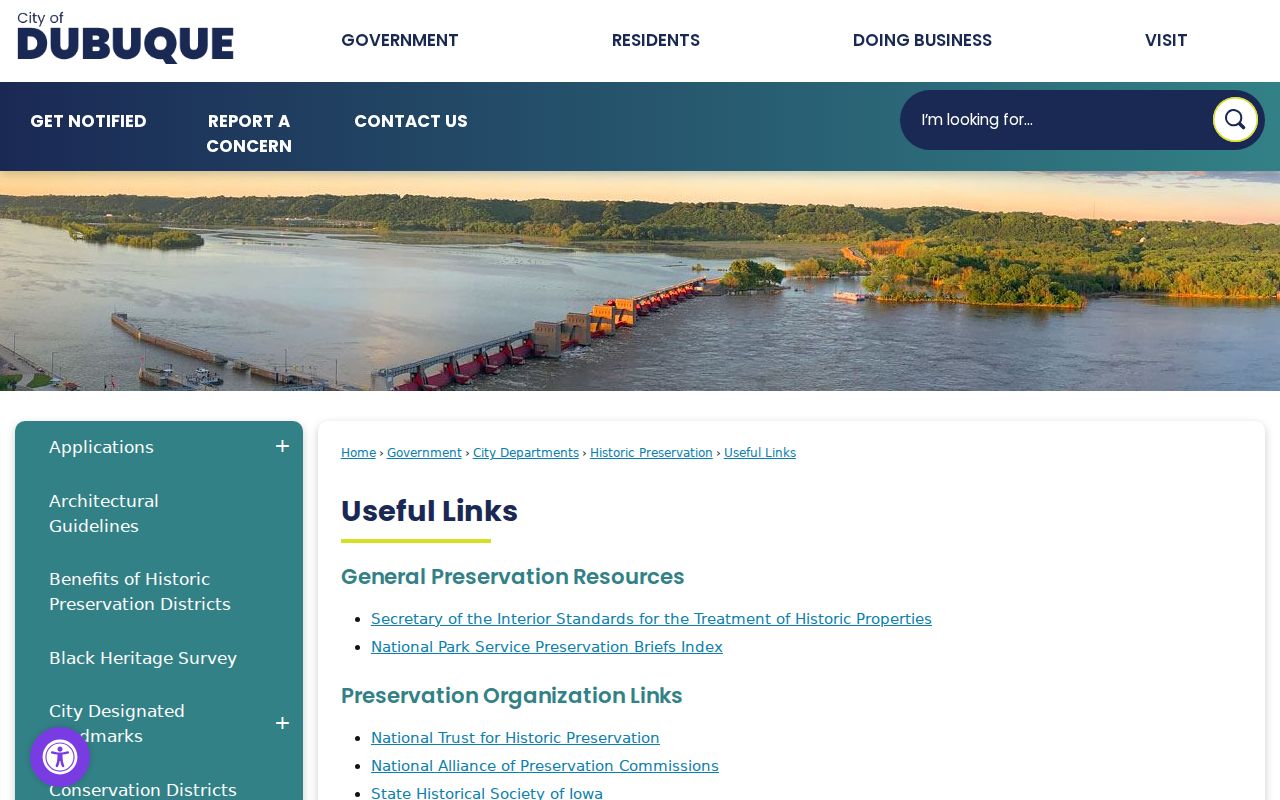
The linked resources shown in the image are routes to separate evidence, not substitutes for each other. Loras holds plat books from 1874, 1892, and 1906, a 1909 Sanborn map, an obituary file, and census material. Carnegie-Stout supplies the digitized directory and newspaper databases.
Decode Old Dubuque Resident Addresses
An early directory may describe a residence as "Locust between 4th and 5th" instead of giving a modern number. A verified citywide renumbering year was not found. Do not force old wording into today's address. Match the legal description, lot and block, plat, adjacent streets, and Sanborn footprint. The 1909 map at Loras and the Library of Congress 1950 set can mark changes in shape, use, materials, and nearby landmarks.
This is a key safeguard for previous residents. The same parcel may outlast a street label, and a rebuilt structure may occupy the same land. State clearly whether the evidence follows the parcel, the building, or the written street address.
Dubuque Resident Recorder Channels
The Dubuque County recorded real-estate page identifies deeds, mortgages, contracts, covenants, easements, leases, releases, plats, surveys, liens, and other document types. Begin online with Cott or Iowa Land Records. If an index loops, lacks an image, or does not reach the needed year, contact the Recorder, request a copy, or inspect the courthouse record. For older series, move to SHSI microfilm.
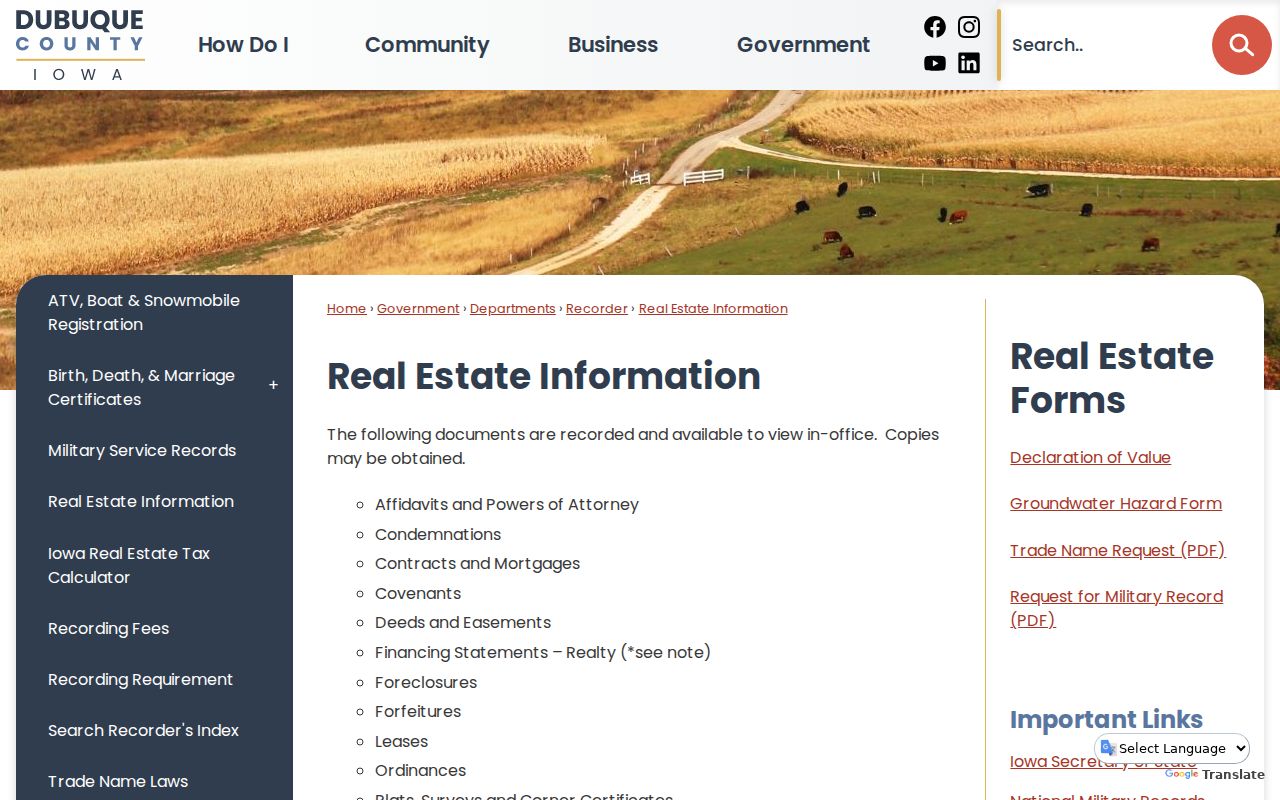
The county page helps identify the right document class before a request. Use a Chapter 22 records request for releasable city or county material that has no public index, such as older permit or zoning files, but ask the direct custodian first and provide the address, date range, parcel number, and desired format.
City monthly permit reports can list a permit number, issue date, address, applicant, owner, business name, work description, value, fee, square footage, and parcel number. Keep those labels separate. An applicant may be a contractor, agent, or business rather than a past resident. A demolition, remodel, solar, sign, or plumbing permit still gives a useful date for changes to the structure. If the online archive does not cover the target period, contact Inspection and Construction Services or request the releasable file by parcel and date range.
Confirm Dubuque's Past Households
Owners are only half the story. Street-order city directories and census schedules can identify listed occupants, boarders, and family members. The Dubuque city directory collections cover 1856-1991 online, while the Center for Dubuque History holds federal census schedules for 1840-1930 and special Iowa censuses for 1854, 1856, 1885, 1895, 1905, 1915, and 1925.
The Carnegie-Stout digitization project history explains how bound and microfilm volumes became the searchable archive used to identify past residents.
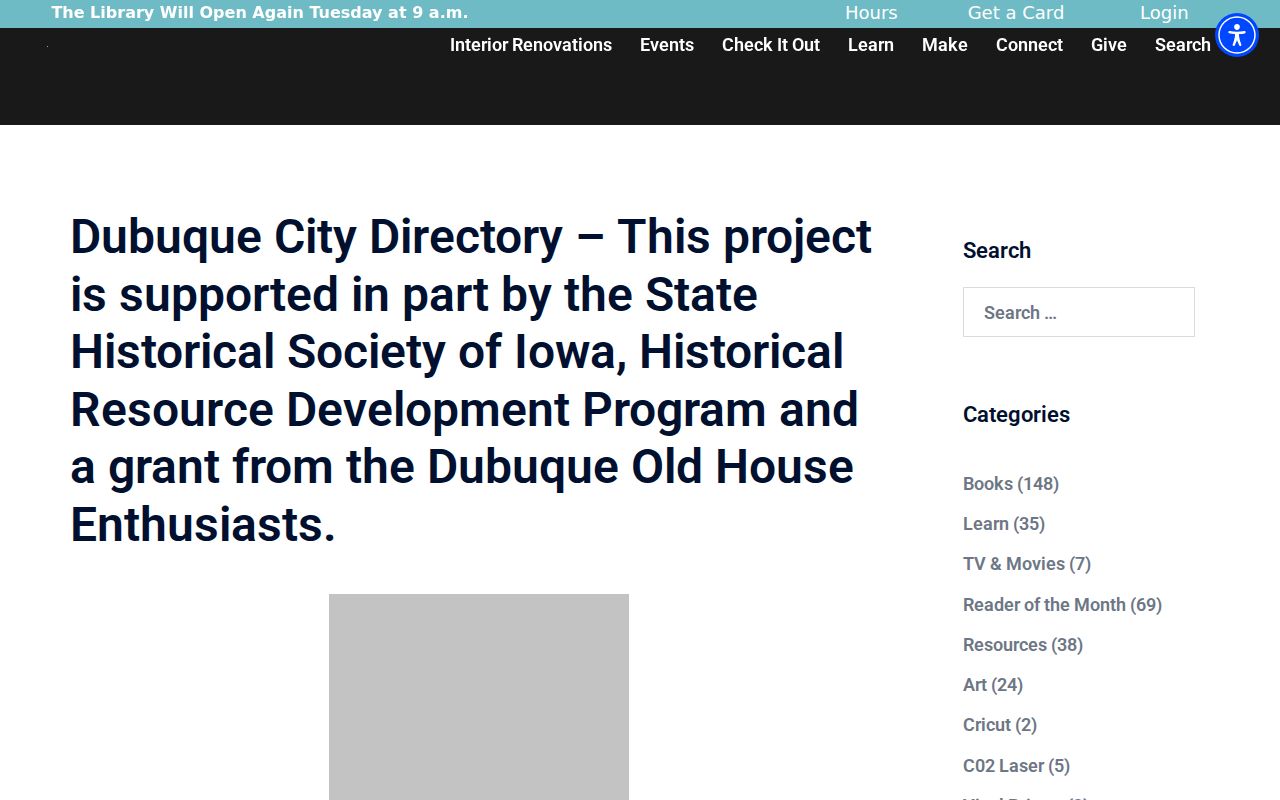
The project image provides provenance for the scanned directory run. Always retain the volume year and page image because OCR can misread names, numbers, and short forms.
Use a simple flow: directory address, closest census household, next directory year, then obituary or probate if a person disappears. Federal schedules are public through 1950 under the 72-year rule. The CDH obituary file, WPA newspaper index, Carnegie-Stout newspaper archive, and probate series can connect a former homeowner to heirs or a later address. A permit applicant is not automatically an owner, and an owner is not automatically an occupant.
Lawful use. Research Dubuque previous residents for family or house history. Never use a record trail to track, harass, or harm a living person.