
Find Residents Across Dubuque Records
Begin with a fact you already have. An address points first to the Dubuque assessor and the GIS parcel map. A full name opens more doors. The voter lookup, court docket, deed index, business records, and a period city directory each answer a different question. Every record captures a role, not a whole life. The assessor names an owner; a deed names a party. A permit may name an applicant who never occupied the building. Dates matter as much as spelling. When a common name floods the results, add a middle initial, former surname, spouse, company, or trust. A tax mailing address can place a person, but it is not proof of residence, and renters may never appear in a property roll at all. Verify with a second record before relying on it.
- Use Beacon or county GIS to connect the name or address to a parcel and PIN.
- Test a known name, ZIP, house number, and birth date in Iowa's official voter status lookup.
- Search the Recorder's Cott index or Iowa Land Records for the deed role and recording date.
- For an older household, browse the local directory volume closest to the target year.
- When an index stops, ask the correct custodian for inspection or a copy under Iowa Code Chapter 22.
Dubuque Resident Record Keepers
Dubuque is the county seat, so its main record offices cluster in and near the city. The Recorder keeps land documents and issues eligible vital-record copies. Two assessors split parcels at the city-limit line. Both point the public to Beacon. Elections maintains the official registration rolls. The Clerk of Court handles district-court and probate files, and the Dubuque street directory lays out the full address-by-address method.
The county assessor sits at 1225 Seippel Road. That office handles land outside the Dubuque city limits. The Clerk of Court, at 720 Central Avenue, can supply court-file access the online docket lacks. Hours differ between offices, so check the linked office page before you visit.
Match Dubuque Parcel Records to Names
The current property trail offers two public paths. Beacon is the intended portal for both assessors. When Beacon will not load, the official county ArcGIS Land Records service works as a parallel index. Its parcel layer exposes a lot. Fields include PIN, owner, situs address, tax mailing address, legal description, deed reference, class, values, tax year, ZIP, acreage, and homestead status. A parcel is a mapped unit of land with its own identifier. The situs is simply the physical site address. The assessor split guards against a common mistake. Property inside the City of Dubuque goes to the City Assessor, while the rest of the county goes to the County Assessor. Postal names do not settle the boundary. Dubuque, Asbury, and Sageville addresses can all fall on either side. GIS can overlay the parcel and city-limit layers, though its own notice calls the map a general index, not a survey or title opinion.
- PIN
- The parcel identification number used to keep one tract distinct.
- Situs address
- The address of the land or building itself.
- Mailing address
- The tax-bill destination, which may differ from where an owner lives.
- Legal description
- The lot, block, plat, or survey language used in land records.
Dubuque Deed Records Link People
Deeds connect people, and Dubuque offers two ways in. The County Recorder maintains a local Cott name index. Iowa Land Records offers a statewide route. Search by grantor, the person giving an interest, or grantee, the person receiving it. The state form also accepts a county, recorded-date range, name or company, document type, image-only option, sort order, and result count. Search depth and image access vary, so a missed web result never proves no deed exists.
| Search control | How it narrows a Dubuque result |
|---|---|
| County | Select Dubuque County rather than searching all 99 counties. |
| Party role | Choose grantor, grantee, or all parties. |
| Date range | Focus on the likely sale, transfer, or filing years. |
| Document type | Separate deeds from mortgages, liens, releases, plats, and other records. |
| Images only | Limit results when a document image is needed, subject to account access. |
A complete chain needs more than the web. The Recorder completes it in person. Carry the parcel PIN and legal description, and the office permits viewing and explains copies. For depth, historical deed and town-lot index series at the State Historical Society reach back to 1834.
Current Dubuque Resident Directory Sources
Modern Dubuque resident directories are separate official rolls. Coverage depends on why each record was created. A careful lookup honors that purpose instead of turning a filing address into a claim of occupancy.
| Dubuque source | People or roles shown | Custodian | Public route |
|---|---|---|---|
| Property roll | Parcel owners and tax mailing contacts | City or County Assessor | Beacon and county GIS |
| Voter status check | A known registered voter and polling context | Iowa SOS and County Elections | Free named lookup |
| Land index | Grantors, grantees, and other document parties | County Recorder | Cott, Iowa Land Records, office |
| Court docket | Named case parties and docket events | Clerk of Court | Iowa Courts Online and courthouse |
| City records | Permit applicants, owners, petitioners, board members | City Clerk and departments | Archive, reports, and requests |
One person often spans more than one record row. The Dubuque resident lookup method compares names, dates, addresses, spouses, occupations, and record roles rather than trusting a single match.
Verify Dubuque Resident Voter Records
Iowa's free voter tool works as a confirmation screen, not an open roster. It demands first name, last name, ZIP code, house number, and exact birth month, day, and year. A correct match confirms registration and polling information. It cannot list everyone at an address. It cannot prove occupancy on a given date. The official Iowa voter lookup shows the required fields before you submit anything.
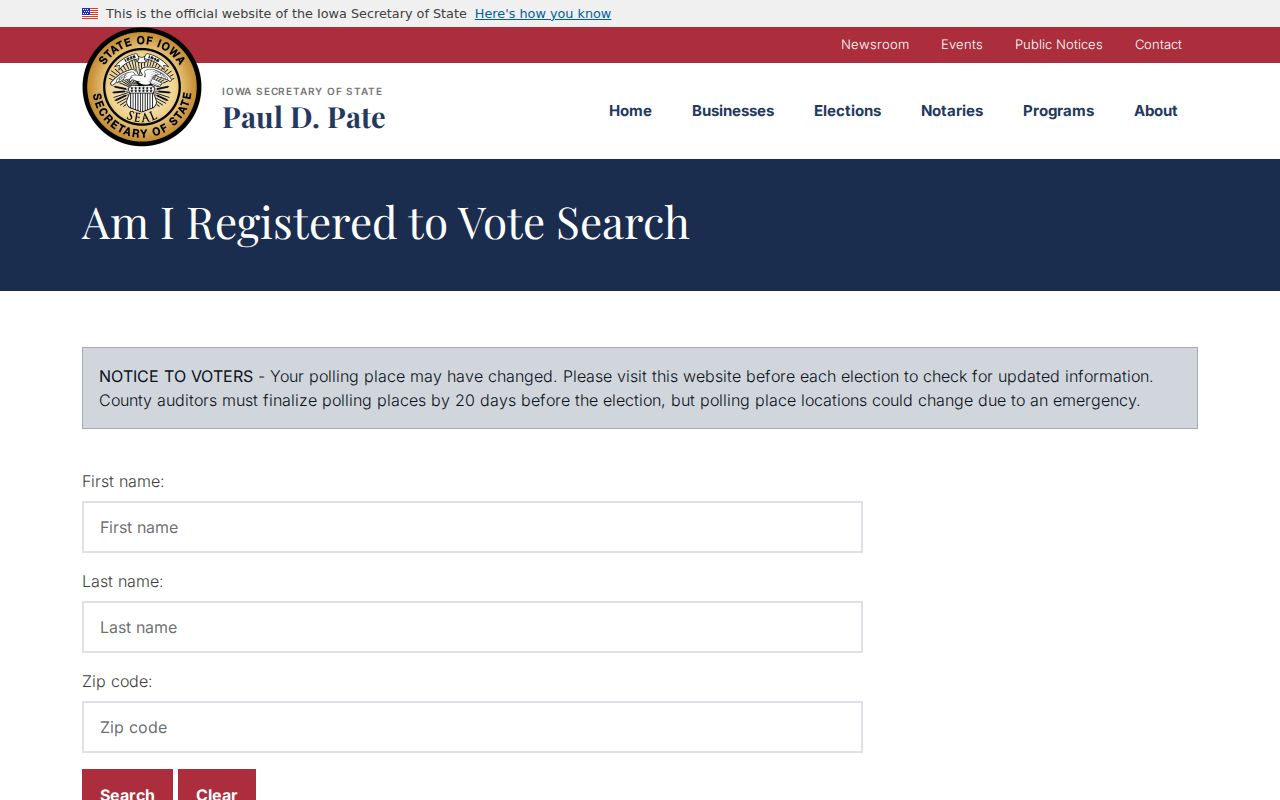
Those strict fields explain many empty results. A spelling slip, wrong ZIP, changed house number, or lagging registration update can all block a match. Full voter-list requests fall under Iowa Code sections 48A.34 and 48A.38 through 48A.39, carry purpose limits, and never serve as a casual people-search shortcut. Safe at Home participants stay behind protected address procedures.
Key limit. Use public resident records only for lawful personal and civic research, never to stalk, harass, threaten, or harm anyone.
Check Dubuque Court Records Carefully
Court dockets are one of the better free public-record routes in Dubuque County. Iowa Courts Online opens basic trial-court docket access at no cost. A search by name pulls the most usable results when you add a date or case type. Try spelling variants too. Shared names are common. Dockets show parties, Case ID, filing events, and any public disposition.
Some files stay off-limits. Sealed, expunged, and juvenile matters never surface as ordinary results. For older cases or copies, contact the Dubuque County Clerk of Court. You can also use a courthouse terminal. Federal cases run through PACER in the Northern District of Iowa. Keep one distinction firm: an arrest, charge, or filing is not proof of guilt. Report the final disposition with the status.
Dubuque Public Safety Search Limits
Dubuque runs its incident lookups through a shared Police to Citizen portal, known as P2C. The city and county Sheriff both use it. Through P2C, a Dubuque resident can browse public calls, filed reports, recent arrests, and wanted-person listings. An inmate-inquiry route is also offered where available. The city cautions that entries get reviewed and are not real-time. Medical details, juvenile matters, and other sensitive material may be withheld from the record.
The Dubuque P2C information page explains the portal's role.
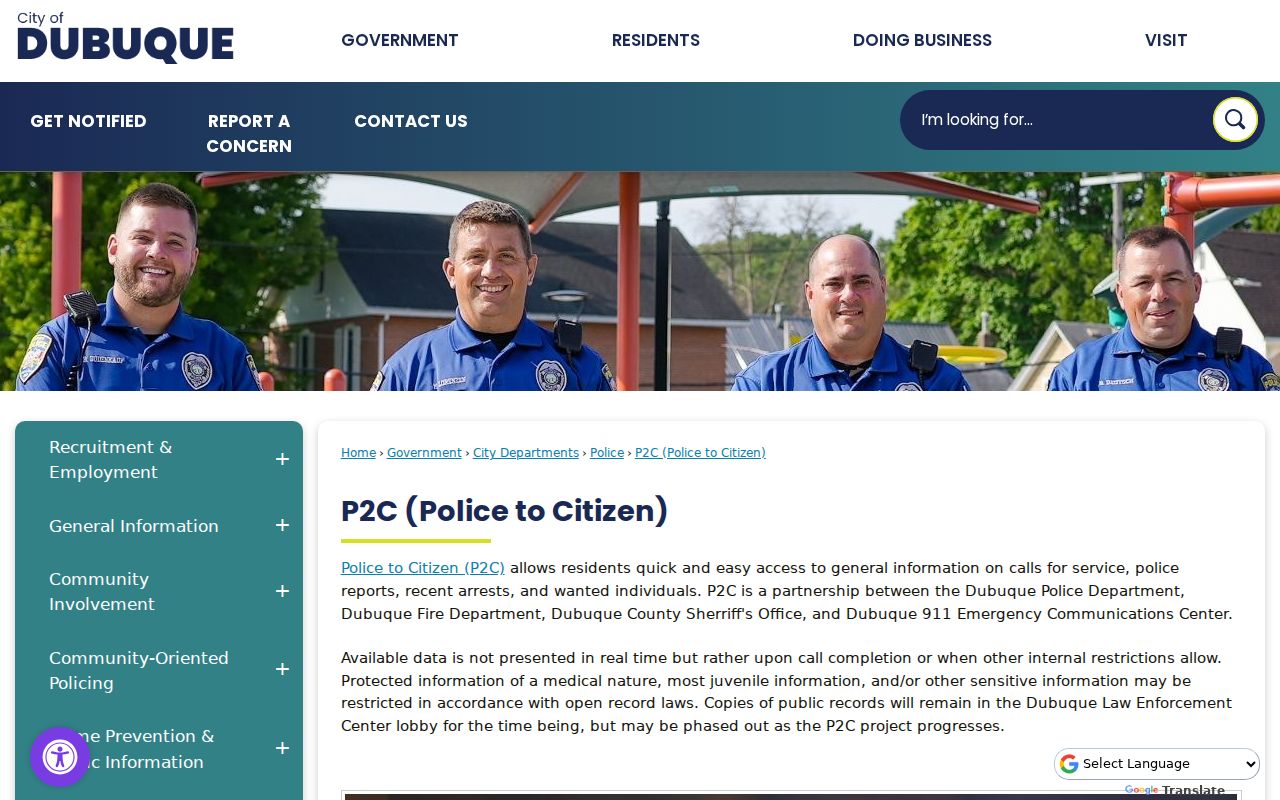
That route is a solid starting point. Still, an incident log is not a residents directory, and a jail record is not a street directory either. Dubuque County publishes no separate public jail roster online. For custody details, the Dubuque County Jail page lists the official contact and service routes.
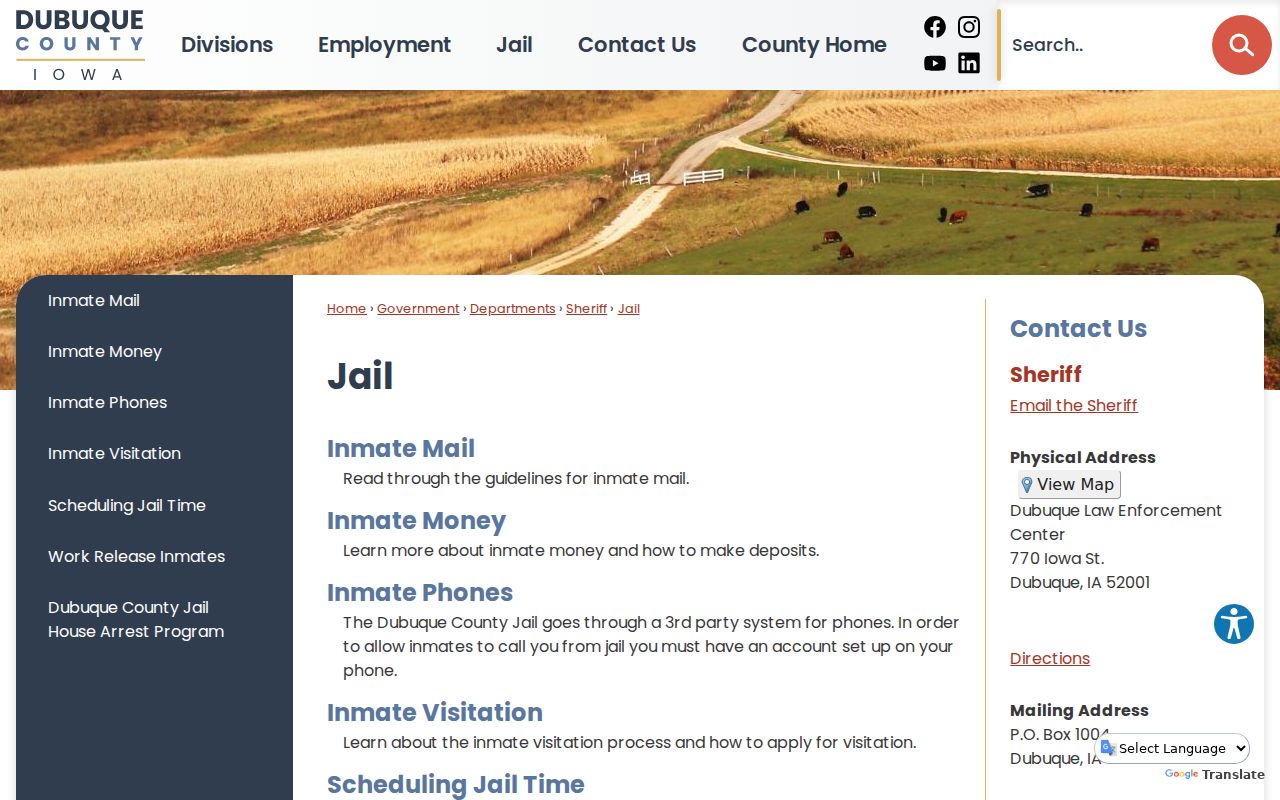
For a live custody question in Dubuque, use P2C first. You can also call the Jail Office at 563-589-4420 or file a focused records request. Along the way, keep a booking, a charge, and a final court disposition distinct in the record.
Dubuque Resident Registry Context
A state system can confirm one narrow public role. The Iowa Sex Offender Registry allows basic name and ZIP code directory searches, along with advanced tools, a map, phone, email, and alert options. The registry itself says its public site is not the full list. It also warns users not to confront anyone listed. Check the current record and keep its update date.
The official Iowa registry provides that public-safety search.
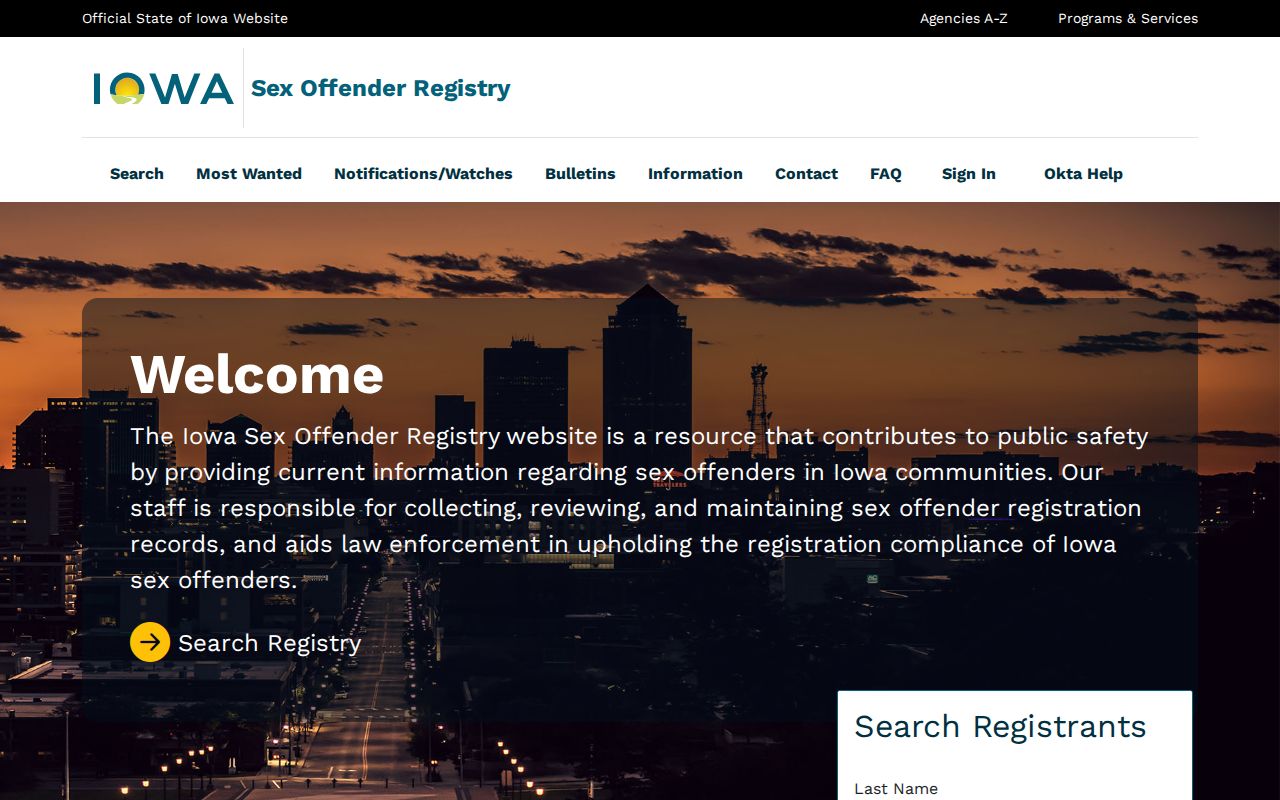
Iowa runs several record systems. They answer questions a Dubuque residents directory cannot. The state DOC posts an offender locator for people in state custody. Jail matters, by contrast, stay with local Dubuque officials. And never merge entries from separate systems just because two names look alike.
Dubuque Business Records Cross-Check Names
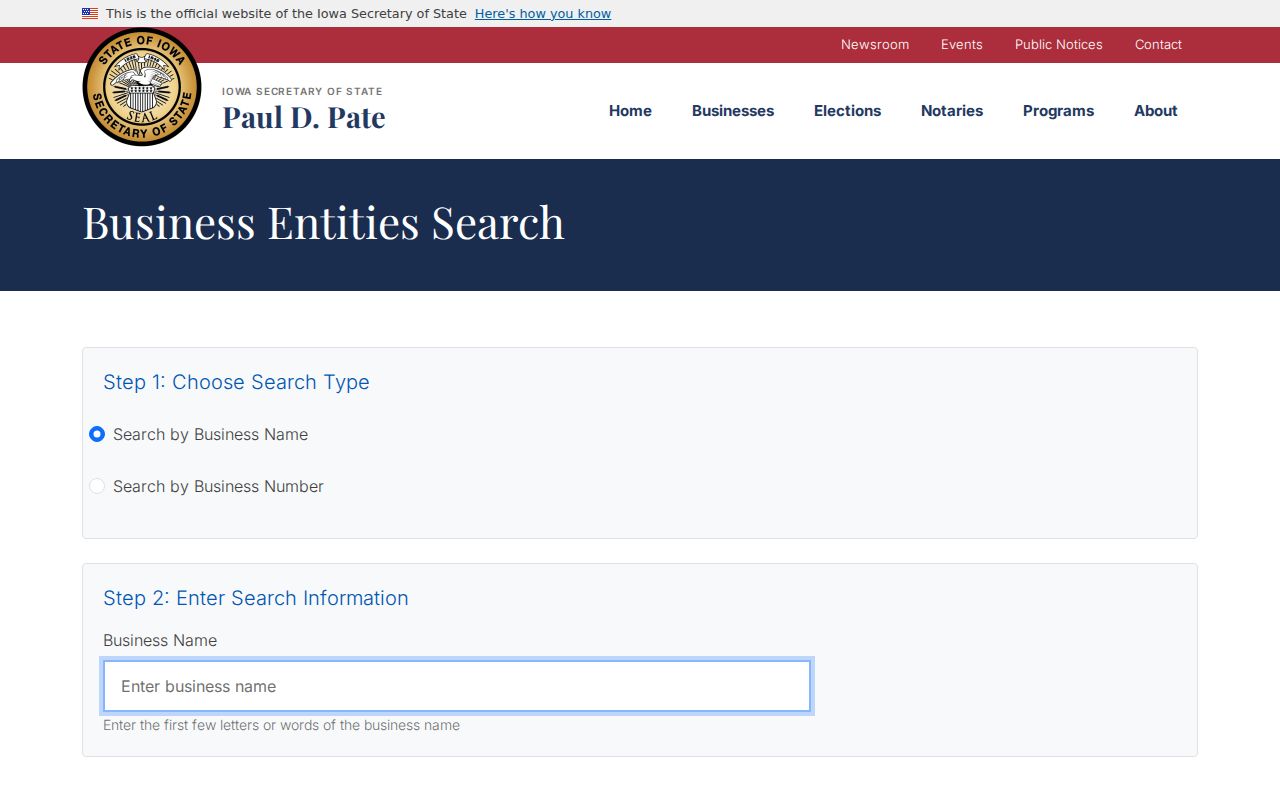
Two Dubuque residents sometimes share a name. Business filings offer a clean way to tell them apart. The Iowa Secretary of State database searches by entity name or number. Results may show status, filings, a registered office or agent, and previous names. Any officers or directors on file may also appear. The database will not hand you a full ownership or membership list. Treat the listed role and filing date as context for a resident lookup. Do not treat them as proof of an address. The Iowa Business Entities Search is the official route.
License records add another layer. DIAL and the individual licensing boards can disclose license type, number, status, company, city, or ZIP where public. Dubuque permit reports go further, listing address, applicant, owner, business, parcel, work description, and value. Treat all of it as affiliation clues. None of it proves the named person lives at a Dubuque address.
Find Dubuque Residents in State Records
The Great Iowa Treasure Hunt can surface a prior city, a business, an estate, or a name variant tied to a Dubuque resident. The official search costs nothing. Begin with a last or business name, then narrow by first name or city. A possible match opens a claim process that demands identity and supporting documents. It still will not establish a current home. The Great Iowa Treasure Hunt is the state source.

Heirs and relatives chasing an older Dubuque connection get real value here. The state portal is the place to confirm both the property and the claim number. Any message demanding advance payment, or pointing to an unofficial claim link, should be ignored.
Browse Historic Dubuque Resident Directories
Dubuque's digitized city directory run spans 1856 through 1991, some 70,999 pages in all. An alphabetical entry might list a spouse, an occupation, an employer, a residence, a telephone, or a widow notation. Street pages flip the question. They take you from an address to the household living there. OCR, the machine-read text pulled from each scanned page, speeds discovery but always deserves a check against the image itself.
Carnegie-Stout Public Library hosts the directory project alongside other local-history resources. The Dubuque city directory page walks through year coverage, abbreviations, shelf access, and pairing a volume with census or obituary material. Remember that a directory entry is a snapshot. It says nothing about the present day.
Dubuque Vital Records Follow Separate Paths
Dubuque County keeps birth, death, marriage, and divorce records in different offices. There is no one shared index. The County Recorder issues certified birth, death, and marriage copies to eligible applicants. County and state rules govern who qualifies. Divorce files belong to the Clerk of Court. Iowa HHS keeps the statewide records. It accepts orders through VitalChek, its authorized outside channel.
Each certified copy costs $20 starting July 1, 2026. Eligibility usually turns on immediate family or another recognized legal or genealogical category. Applicants also need government ID and a completed application. Iowa law allows inspection of county birth, marriage, and death records at least 75 years old. Inspection alone does not entitle anyone to a certified copy. Check current county instructions, since older forms may still list the former fee.
Request Missing Dubuque Resident Records
Iowa Code Chapter 22 opens public records to anyone who wants to examine them. It also covers copying, unless a legal exception applies. Dubuque County's May 4, 2026 policy names the Auditor as lawful custodian. Requests are accepted in person, in writing, by phone, or electronically. Writing is encouraged but not always required. Help the staff find what exists. Give a date range, name variants, an address, a PIN, a case or permit number, the office involved, and the type of record.
The county request page links the current form and policy. Choose inspection, paper copies, or electronic delivery. The county can supply an estimate and seek prepayment before proceeding. One caution: the policy and its worksheet disagree on a single color-copy figure. So ask for a current estimate rather than trusting a fixed amount.
City material is different. It routes through the City Clerk or whichever department keeps the record. Council proceedings can also be read at City Hall or at Carnegie-Stout. Older items may sit elsewhere entirely. The State Historical Society could be the proper keeper. So could the Center for Dubuque History, or the DCHS River Library & Archives.
Chapter 22 guarantees access to records that already exist. It does not force an office to build a new resident list. Nor does it require research into a family for you. When only an index entry is needed, ask for inspection. For copies, identify the exact page, instrument, case, meeting, or permit if you can. Iowa sets no universal response deadline, and a good-faith confidentiality review takes time. Keep the request narrow and hold onto the office's estimate and response.
Dubuque Directory Privacy Boundaries
Public is not the same as complete. Driver records stay restricted under federal law. Utility customer data, Safe at Home addresses, confidential voter fields, medical material, most juvenile records, and sealed or expunged cases never feed a general residents directory. A custodian may redact protected facts or deny access. The custodian must explain the legal basis for doing so.
Commercial people-finder databases pose the opposite problem. They blend stale marketing data with deeds, filings, and old addresses. Their results often tangle relatives or strangers who share a name. Official records change too. But each one has a custodian, a date, and a correction route. Verify any lawful personal, family-history, estate, consumer-safety, or civic question against the source record itself.